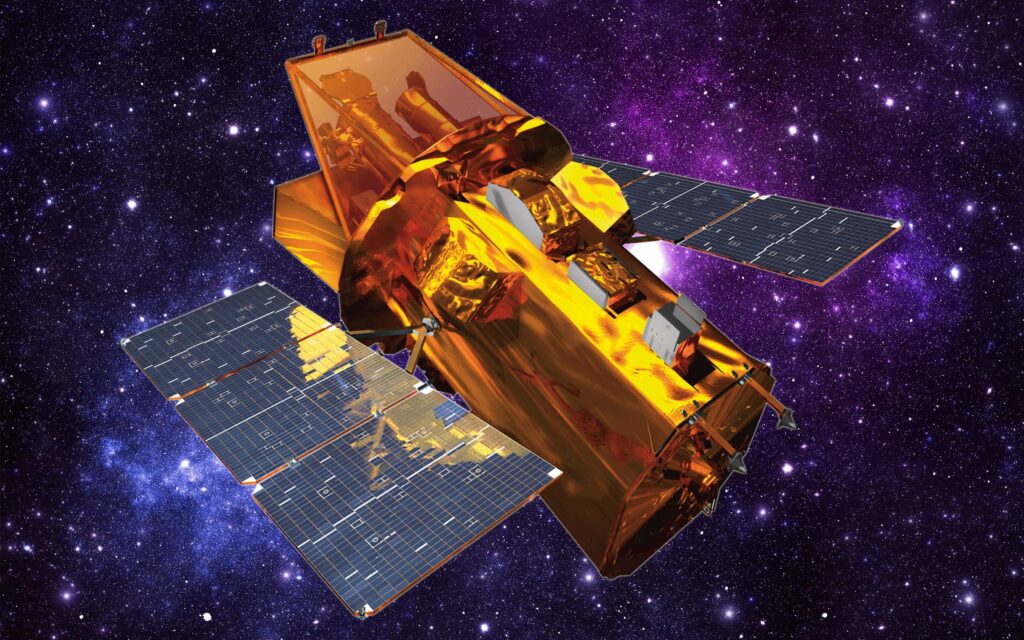
For more than twenty years, a spacecraft named Swift chased some of the universe’s briefest and most powerful flashes. On November 4, its own journey ended as it descended into Earth’s atmosphere.
A satellite built to react in seconds
Launched in 2004, NASA’s Neil Gehrels Swift Observatory was designed to detect gamma-ray bursts and rapidly point its instruments towards them. These bursts can signal extraordinary cosmic events, including the collapse of massive stars and collisions involving neutron stars. Swift’s rapid alerts allowed observatories around the world to investigate the fading afterglow.
Why the spacecraft could not stay aloft
Earth’s thin upper atmosphere gradually drags on satellites in low orbit. Over time, Swift lost altitude, prompting efforts to explore whether its orbit could be raised. The proposed rescue did not prevent its eventual re-entry. The observatory entered the atmosphere on November 4 at approximately 12:39 UTC, above the North Sumatra region of Indonesia.
What happens to a telescope during re-entry?
Intense heating breaks apart most spacecraft material during an uncontrolled descent. Some fragments can potentially survive, but no confirmed ground impact was immediately reported. The exact outcome of individual components remains uncertain.
Its discoveries will outlast the spacecraft
Swift’s mission transformed the study of fleeting high-energy events. Its observations, collected across more than two decades, remain valuable to scientists long after the satellite’s final orbit.
Source: NASA. Image: illustration.
Read next: SpaceX launches final solar-array pair for the International Space Station